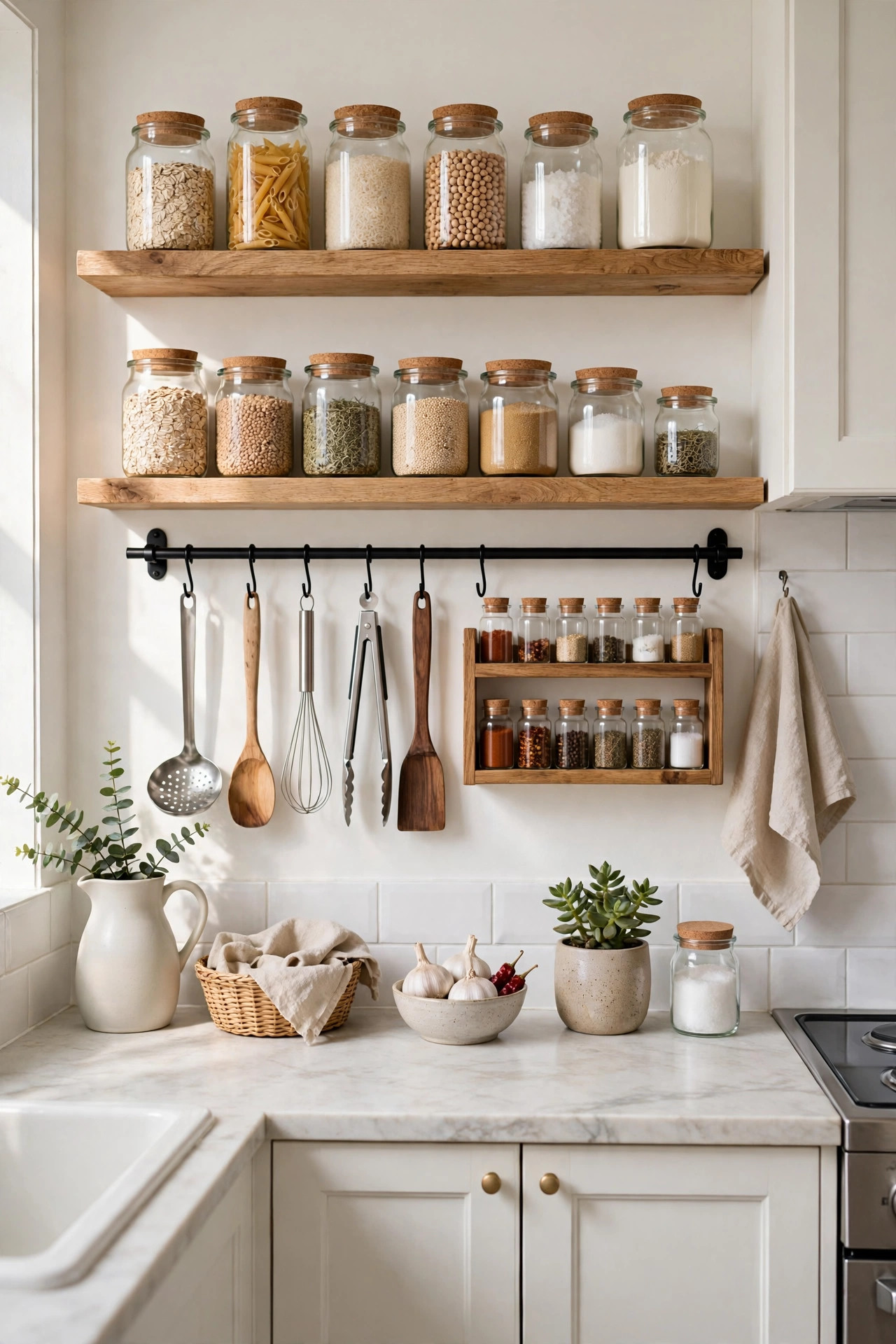
A tiny kitchen can still be a joy to cook in, but only if everything has a place and the things you use most are within easy reach. The problem in most small kitchens is not a lack of cabinets. It is that the cabinets are full of things you rarely use, while the things you use every day are buried behind them. Fix that mismatch, and the same kitchen suddenly works.
This guide is built for real tiny kitchens: one or two people cooking, limited counter space, limited cabinets, and a rental you cannot renovate.
Sort Your Kitchen by How Often You Use Things
Start by taking everything out of one cabinet at a time. It sounds messy, but it is the only way to see what you actually own. Sort items into three groups: daily use, weekly use, and rarely or never use.
Daily use items are your plates, bowls, glasses, coffee mugs, cooking oil, salt, and the pan you reach for most mornings. Weekly use items are baking trays, the blender, and the big pot for pasta night. Rarely used items are the bread maker, the fondue set, and the third set of mixing bowls you got as a gift.
Daily items go at eye level and within arm's reach of where you use them. Plates go near the dishwasher or drying rack. Cooking oil and spices go near the stove. Weekly items go on higher shelves or lower cabinets. Rarely used items go on the very top shelf, in a high cupboard, or out of the kitchen entirely. If you have not used something in a year, donate it or store it elsewhere. A tiny kitchen cannot afford to store a gadget museum.
Use the Inside of Cabinet Doors
Cabinet doors are free storage space that most people ignore. Stick a small rack on the inside of a door to hold spices, measuring spoons, or cleaning supplies. Use adhesive hooks to hang measuring cups. Mount a small whiteboard or a notepad for a shopping list.
Under the sink is another hidden zone. A small tension rod across the inside of the cabinet holds spray bottles by their triggers, freeing the floor of the cabinet for sponges, cloths, and bin bags. A small stackable shelf or a turntable inside a deep cabinet stops items from getting lost at the back.
Turntables, also called lazy Susans, are one of the best small kitchen buys. A 10 inch turntable costs around 8 to 15 dollars and transforms a deep corner cabinet from a black hole into a place where you can actually find the soy sauce. Put one in the pantry cabinet for oils and sauces, and one under the sink for cleaning products.
Go Vertical Inside Cabinets
Most cabinets waste half their height. A stack of plates uses the bottom 4 inches of a 12 inch shelf, and the rest is empty air. Shelf risers fix that. A simple wire or bamboo shelf riser costs 10 to 20 dollars and creates a second level inside a cabinet. Put mugs on the top level and bowls underneath, or plates on the bottom and small bowls on top.
Stackable bins work the same way in the pantry. Clear bins let you see what is inside, and they stop packets from falling over. Label the front of each bin, even if it seems obvious. Labels save you from opening five bins to find the rice.
For pots and pans, a vertical lid organizer or a pan rack stops the daily crash of lids falling when you pull out one pan. A pan organizer that holds pans upright costs around 15 to 25 dollars and fits in a standard cabinet. It also protects nonstick surfaces from scratches, because pans are no longer stacked on top of each other.
Free Up the Countertop
Counter space is the scarcest resource in a tiny kitchen. The rule is simple: only the things you use every single day earn a permanent spot on the counter. For most people, that is a kettle or coffee maker and maybe a knife block. Everything else gets put away after use.
A dish drying rack that fits over the sink frees a whole section of counter. A cutting board that fits over the sink does the same, giving you extra prep space when you need it and disappearing when you do not. Both cost around 15 to 30 dollars and are worth it in a kitchen where every inch counts.
Use the wall above the counter. A magnetic knife strip frees the space a knife block takes up, and it looks better too. A wall mounted rail with hooks holds utensils, mugs, and small pans. A small shelf above the counter holds spices and oils, so they are not crowding the work surface. If you cannot drill, look for adhesive rails or freestanding shelf units that sit on the counter and add a second level above it.
Appliances are the biggest counter thieves. If you have a toaster, a blender, a food processor, and a stand mixer all out at once, you have no space to cook. Keep one or two out and store the rest in a cabinet. An appliance garage, which is just a small cabinet or a covered shelf on the counter, can hide appliances while keeping them easy to reach.
Create Zones for Cooking, Prep, and Cleaning
Professional kitchens work because they are organized into zones, and a tiny kitchen works the same way. Create a cooking zone around the stove with oils, spices, utensils, and pans. Create a prep zone on the largest stretch of counter with your cutting board, knives, and mixing bowls nearby. Create a cleaning zone around the sink with dish soap, sponges, and towels.
When items live in the zone where they are used, you stop walking back and forth across the kitchen. Cooking gets faster and less frustrating. It also makes it obvious when something is in the wrong place, so tidying up takes seconds instead of minutes.
The fridge deserves the same zone thinking. Keep daily items at eye level: milk, eggs, leftovers you will eat today. Keep condiments in the door. Use clear bins inside the fridge to group similar items, so a small tub of yogurt does not get lost behind a large container. Label leftovers with the date. A fridge that you can see into is a fridge where food does not go to waste.
Small Tools That Make a Big Difference
A few cheap tools solve the most common tiny kitchen frustrations. Drawer dividers keep utensils from turning into a tangled mess. A cutlery tray with adjustable compartments costs around 10 to 15 dollars and fits most drawers. A narrow pull out organizer between the fridge and the wall, if you have even a 6 inch gap, holds oils, spices, and canned goods.
Hooks under upper cabinets hold mugs, freeing shelf space inside the cabinet. A paper towel holder mounted under a cabinet frees counter space. A small basket attached to the side of a cabinet holds cutting boards upright.
For the pantry, decant dry goods like rice, pasta, and flour into clear, airtight containers. They stack neatly, they keep food fresh longer, and you can see at a glance when you are running low. You do not need matching designer containers. Any clear containers with lids that stack will do, and a set of five costs around 15 to 25 dollars.
The Daily Habits That Keep a Tiny Kitchen Working
A tiny kitchen needs a nightly reset more than any other room. Wash the dishes or load the dishwasher after dinner. Wipe the counters. Put away anything that migrated onto the counter during the day. Put the cutting board and knives back in their zone. The whole routine takes five to ten minutes, and it means you wake up to a kitchen you can actually cook in.
Do a weekly fridge clear out. Toss anything past its date, use up leftovers, and wipe one shelf. Do a monthly cabinet check. If something has not been used in a month and is not seasonal, ask yourself whether it deserves its spot.
A tiny kitchen will never have as much space as a big one, and that is fine. It does not need more space. It needs better decisions about what lives where, and a habit of putting things back. Sort by frequency of use, go vertical inside cabinets, free the countertop, and organize by zone. Do those four things, and cooking in your tiny kitchen will start to feel easy instead of stressful.