The entryway is the first thing you see when you come home, and the last thing you see when you leave. In a small apartment, it is often just a patch of floor by the front door, with no hallway, no closet, and no obvious place for shoes, coats, keys, and bags. Without a system, that patch of floor becomes a pile of clutter that greets you every day.
A good entryway does not need a lot of space. It needs a clear job for each item, and a place for that job to happen. This guide covers how to build that system, even if your entryway is just a corner by the door.
Define the Space, Even Without a Hallway
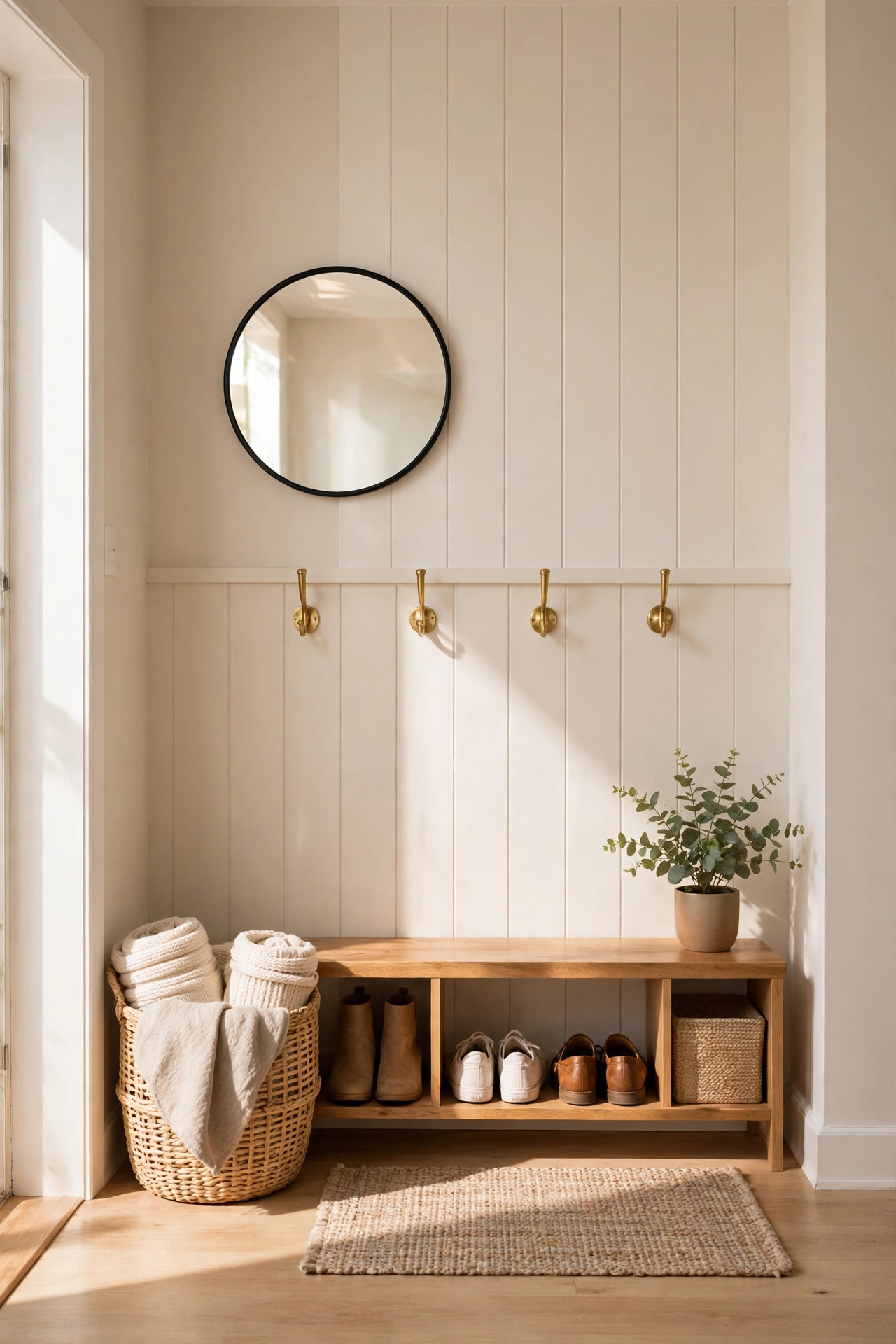
If your apartment has no separate hallway, define the entryway with a rug, a piece of furniture, or a change in the wall. A small rug by the door marks the entryway zone and catches dirt from shoes. A narrow console table or a small bench against the wall creates a visual boundary. A mirror or a piece of art on the wall above that spot tells the eye that this is a distinct area.
A rug is the simplest way to define the space. Choose a rug that is easy to clean, because it will get the most foot traffic in the home. A washable rug, a low pile rug, or an indoor outdoor rug all work well. A rug that is 2 by 3 feet is enough for most small entryways. It should be large enough for two people to stand on while they put on shoes, but not so large that it blocks the door.
If you have a little more space, a small bench or a narrow console table anchors the entryway. A bench gives you a place to sit while you put on shoes. A console table gives you a surface for keys, mail, and a small plant. Choose a piece that is narrow, no more than 10 to 12 inches deep, so it does not block the walkway.
Hooks Are Better Than a Coat Closet
In a small apartment, wall hooks are often more practical than a coat closet. A row of three to five hooks on the wall holds coats, jackets, bags, hats, and dog leashes, and everyone can reach them easily. A coat closet, by contrast, often becomes a dark, overstuffed space where coats get buried.
Install hooks at two heights if you share the home with children, or if you want to hang both long coats and short items. Use sturdy hooks rated for the weight of a winter coat and a bag. Adhesive hooks work for light items, but for coats, screw in hooks are safer if your landlord allows them. If you rent and cannot drill, a freestanding coat rack is the alternative. A slim coat rack costs 25 to 40 dollars and holds four to six items without any wall fixings.
Assign one hook per person. That simple rule stops the daily argument about whose coat is on the floor. Each person is responsible for their own hook, and if the hook is full, something needs to go back in the closet.
Shoe Storage That Actually Works
Shoes are the biggest source of entryway clutter. The rule is simple: only the shoes you wear every day live by the door. The rest live in the closet or in storage.
A small shoe rack by the door holds two to four pairs per person. A two tier rack costs 15 to 25 dollars and fits in a narrow space. A shoe tray underneath the rack catches dirt and water, and it is easy to clean. A shoe cabinet with doors hides the shoes completely and looks like a piece of furniture, but it costs more, usually 40 to 80 dollars, and it needs more space.
If you have no floor space for a rack, use the wall. A wall mounted shoe organizer with pockets holds shoes vertically, or a narrow shelf above the door holds out of season shoes in boxes. A hanging shoe organizer on the back of a closet door, if your closet is near the entryway, is another option.
Keep a small brush or a cloth by the door for quick shoe cleaning, and a small basket for shoe care items like spare laces and waterproof spray. When shoes are easy to put away, they actually get put away.
A Home for Keys, Mail, and Small Items
Keys, mail, sunglasses, and wallets are the small items that cause the most entryway chaos. They need a single, obvious home, or they will end up on every surface in the apartment.
A small tray, bowl, or wall mounted organizer by the door solves this. A tray on a console table holds keys, sunglasses, and a wallet. A small wall mounted shelf with hooks underneath holds keys on hooks and mail on the shelf. A magnetic key holder on the wall keeps keys visible and easy to grab.
Choose one spot and use it every time. The habit matters more than the product. Put your keys in the tray the moment you walk in, every time, and you will never lose them again. The same applies to mail. Sort mail the moment you bring it in: recycle junk mail immediately, put bills in one spot, and file anything important. A small wall mounted mail sorter or a basket on the console table keeps mail from piling up on the kitchen counter.
A small mirror above the entryway table is useful for a last check before you leave, and it makes the entryway feel brighter and larger. A mirror with a small shelf underneath combines the mirror and the tray in one piece.
Bags, Umbrellas, and Seasonal Gear
Bags need a hook or a basket, not the floor. A hook by the door holds a daily bag, a tote, or a backpack. A basket under a console table holds reusable shopping bags, a gym bag, or a laptop bag. If you have several bags, keep one by the door and store the rest in the closet.
Umbrellas need a stand or a hook. A slim umbrella stand costs 15 to 25 dollars and fits in a corner. A hook on the wall holds one umbrella. A small tray under the stand catches drips on rainy days. Without a designated spot, umbrellas end up leaning against walls, falling over, and dripping on the floor.
Seasonal gear needs a rotation system. In winter, the entryway holds coats, hats, scarves, and gloves. In summer, it holds sunglasses, a sun hat, and a light jacket. Store the out of season items elsewhere, in a closet or in a labeled box on a high shelf. A small basket for the current season's accessories, like gloves in winter or sunscreen in summer, keeps those items together and easy to find.
Keep It Tidy With a Daily Reset
An entryway gets messy fast because it is a high traffic area. A daily reset keeps it under control. When you come home, hang up your coat, put your shoes on the rack, and put your keys in the tray. When you leave, take what you need and leave the rest. The whole routine takes less than a minute.
Do a weekly entryway check. Put away any shoes that do not belong there. Return any items that have migrated to the entryway from other rooms. Wipe the console table, shake out the rug, and check that hooks are not overloaded. A weekly check takes five minutes and stops the entryway from sliding back into clutter.
Keep a donation bag near the entryway, or in the closet by the door. When you notice a coat you no longer wear, or shoes that are worn out, put them in the bag immediately. When the bag is full, donate it. This keeps the entryway from filling up with items you no longer use.
Small Entryways Can Still Feel Welcoming
An entryway does not need to be large to feel welcoming. A clean rug, a clear surface, a small plant, and a piece of art make the space feel intentional. A warm light, if you have a lamp or a wall light by the door, makes coming home feel cozy in the evening.
Avoid overdecorating the entryway. It is a functional space first. One plant, one piece of art, and one decorative item are enough. More than that, and the entryway starts to feel cluttered, which defeats the purpose.
Your entryway sets the tone for your whole home. When it is tidy and organized, the rest of the apartment feels calmer. When it is cluttered, the whole home feels messy, even if the other rooms are clean. Define the space with a rug, add hooks and a shoe rack, give keys and mail a single home, and keep up the daily reset. Start with the rug and the hooks this weekend, and you will notice the difference the first time you walk through the door.